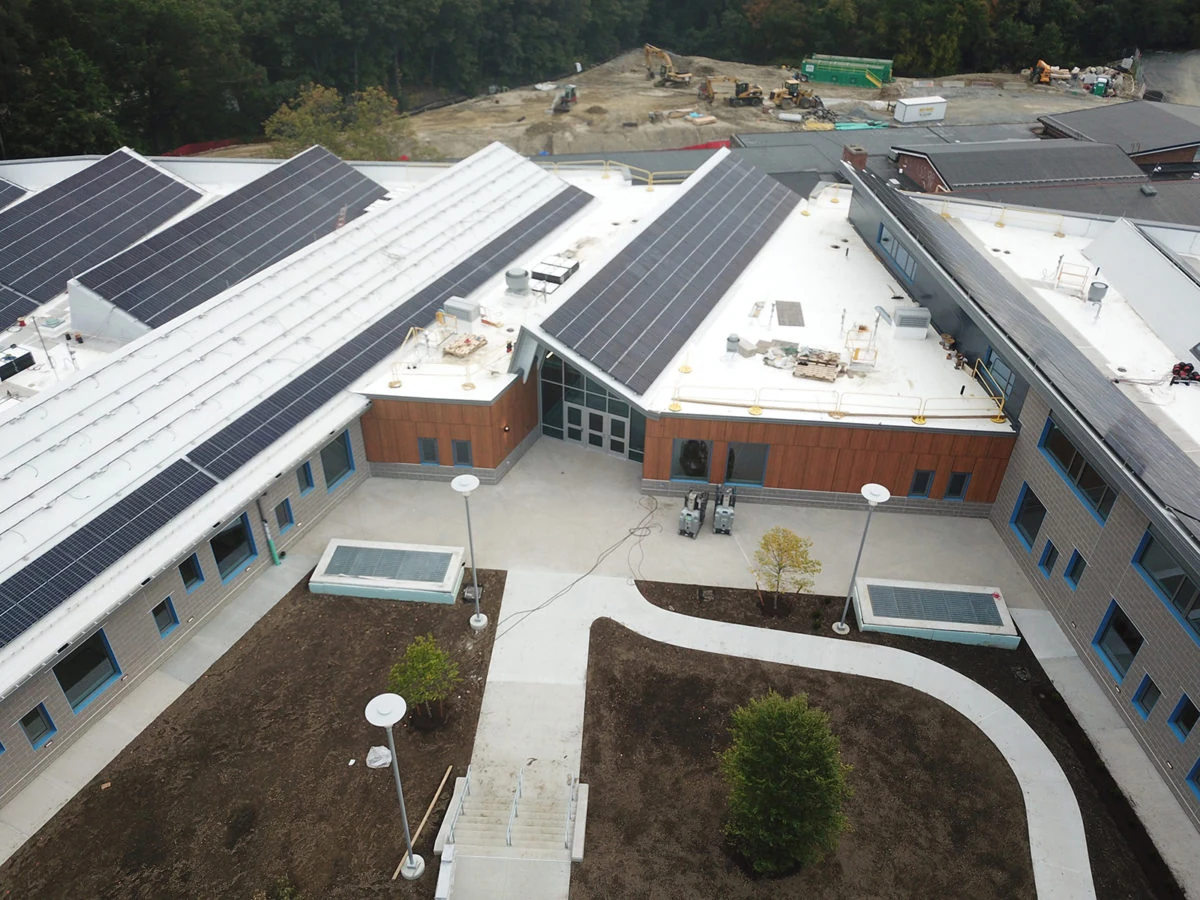
Sika Sarnafil Roofing Systems in Fort Collins, CO
Commercial Roofing
Roofing Manufacturers
Sika Sarnafil: The PVC Specialist We Bring Into Chemical-Exposure Projects
Sarnafil built its reputation on reinforced PVC membrane long before it became part of Sika, the Swiss chemical and construction materials company. That PVC focus carries through today, and it's the manufacturer we lean on most heavily when a project's exposure profile makes PVC the clear right answer rather than a nice-to-have upgrade over TPO. It's a narrower catalog than some of the bigger generalist manufacturers, but that focus is exactly what makes it useful for the specific projects where it fits.
A Product Line Rooted in PVC and FPO
Where a lot of manufacturers treat PVC as one line item among several single-ply products, Sarnafil's institutional history is rooted in it, going back decades on European and later US commercial and institutional buildings. Their catalog also includes FPO membrane, a thermoplastic polyolefin technology that shares some installation characteristics with TPO but with different long-term flexibility and plasticizer-free composition. On a school, hospital, or lab-adjacent building where long service life and chemical resistance both matter, Sarnafil's depth in this specific product category is a real advantage over manufacturers where PVC is a smaller part of the overall catalog.
Welded Seams and Attachment Options
Like other thermoplastic membranes, Sarnafil PVC uses hot-air welding to fuse seams into a continuous, homogeneous bond rather than an adhesive lap joint. We probe every welded seam on a Sarnafil install for the same reason we do on any welded membrane system: a cold weld is invisible until it fails, and catching it during installation costs nothing compared to a callback leak a year later.
Sarnafil systems install as mechanically fastened, fully adhered, or ballasted assemblies depending on the building's deck type and structural capacity. Ballasted PVC works well on structurally sound decks where the owner wants to avoid extensive fastener or adhesive penetration, though we confirm the deck can carry the ballast load before recommending it, particularly on older buildings around Old Town Fort Collins that weren't necessarily framed with that load in mind originally.
Grease and Chemical Resistance in Practice
The reason Sarnafil shows up most often on our brewery, distillery, and food-production project list is straightforward chemistry. PVC and FPO membranes resist fats, oils, grease, and a range of solvents better than TPO or EPDM over the long term, and buildings venting kitchen or process exhaust across the roof surface benefit directly from that resistance. We also consider it on rooftop chemical storage or handling situations tied to light industrial and lab space near CSU-adjacent development. That resistance profile matters more in a climate with hard freeze-thaw cycling too, since a membrane that's already been softened or degraded by grease exposure handles daily thermal swings worse than a membrane still at full strength.
Where Sarnafil Gets Specified Locally
Given the chemical-resistance profile, Sarnafil fits a specific set of project types more consistently than others, and we bring it into the conversation early on any bid where the building's use suggests rooftop exhaust or chemical exposure rather than waiting for the owner to ask about it:
- Brewery and distillery production buildings with rooftop kitchen or process exhaust penetrations
- School and institutional buildings prioritizing long service life and welded-seam reliability
- Medical office and healthcare-adjacent buildings with specific chemical exposure considerations
- Light industrial buildings venting solvents or process chemicals through rooftop equipment
- Long-hold institutional projects where the premium over TPO is justified by the exposure profile
Cost Relative to Standard TPO
Sarnafil PVC and FPO products typically cost more per square than standard TPO, in line with PVC pricing generally. For buildings without chemical or grease exposure, that premium usually isn't worth paying and we'll recommend TPO or EPDM instead. For buildings with genuine exposure, the long-term cost comparison flips once you factor in a prematurely degraded TPO roof under sustained grease or chemical contact.
Warranty Structure and How Sarnafil Compares
Sarnafil's warranty programs follow the standard industry tier structure, varying by product, thickness, and installation method, with coverage requirements tied to installer certification. As with any manufacturer, we walk through the actual coverage document and exclusions with the owner rather than quote a generic warranty length.
Johns Manville and Carlisle both manufacture competitive reinforced PVC products, and the comparison usually comes down to specific reinforcement construction, published performance data, and current warranty terms for the project at hand rather than a clear across-the-board winner. We run that comparison on every chemical-exposure project rather than default to Sarnafil out of habit.
Common Questions About Sika Sarnafil Products
Is Sarnafil only for specialty buildings, or can it go on a standard roof?
It can go on any building, but the cost premium over TPO usually only makes sense where chemical or grease exposure or long institutional hold periods justify it.
What's the difference between PVC and FPO in Sarnafil's line?
Both are thermoplastic membranes with hot-air welded seams; FPO uses a different, plasticizer-free polymer formulation with its own long-term flexibility characteristics.
Does Sarnafil hold up to hail as well as TPO?
Reinforced PVC and reinforced TPO perform similarly under standard impact testing at comparable thickness; neither is immune to severe hail.
Can Sarnafil PVC be ballasted on any roof deck?
Only on decks with sufficient structural capacity for the ballast load, which we confirm before recommending that attachment method.
How long does a Sarnafil PVC roof typically last?
Well-installed reinforced PVC commonly runs 20 years or more, with grease and chemical exposure being the main variable that shortens or extends actual service life.
Roof
GALLERY