EPDM Commercial Roofing in Fort Collins, CO
Commercial Roofing
Commercial Roofing Services
Black Rubber Roofs Still Do the Job Over Old Town's Breweries and Older Buildings
EPDM is the roof we get called back to most often on buildings that have already had one, because it's forgiving to patch and cheap to keep in service. It's the roof we still see on a lot of Old Town commercial buildings and on brewery production spaces where tank and vent penetrations run the length of the roof deck.
Why Breweries Keep Choosing Rubber
A brewery roof isn't a clean field of membrane. Fermentation tank vents, glycol lines, steam exhaust, and CO2 relief penetrations punch through the deck in patterns that change as the operation grows. EPDM's field-applied flashing and pourable sealer pockets handle odd-shaped penetrations better than a heat-welded membrane does, especially when a brewery adds equipment mid-lease and needs a quick, reliable tie-in.
We've patched EPDM roofs around new tank installs in Old Town more than once where the original roofer never anticipated the equipment layout that came later. Rubber gives us room to work around that kind of change, and it also gives us room to correct a previous contractor's flashing shortcuts without tearing off the whole field to do it.
Black Membrane and Fort Collins Winters
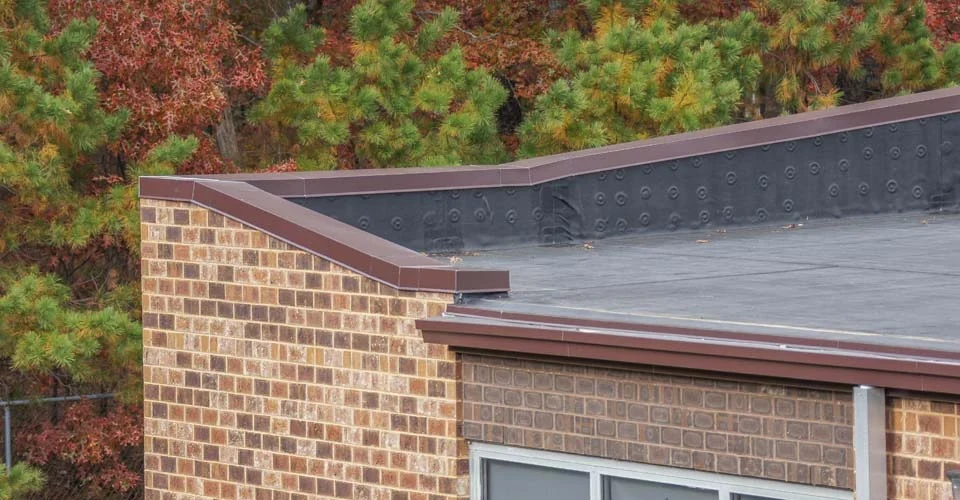
Black EPDM absorbs heat, which sounds like a liability until you factor in a Front Range winter. On buildings where snow load and ice on the roof surface are a bigger practical concern than summer cooling costs, the dark membrane sheds snow faster than a white TPO sheet would. We see this matter most on single-story retail and light industrial buildings where snow removal isn't part of anyone's maintenance budget.
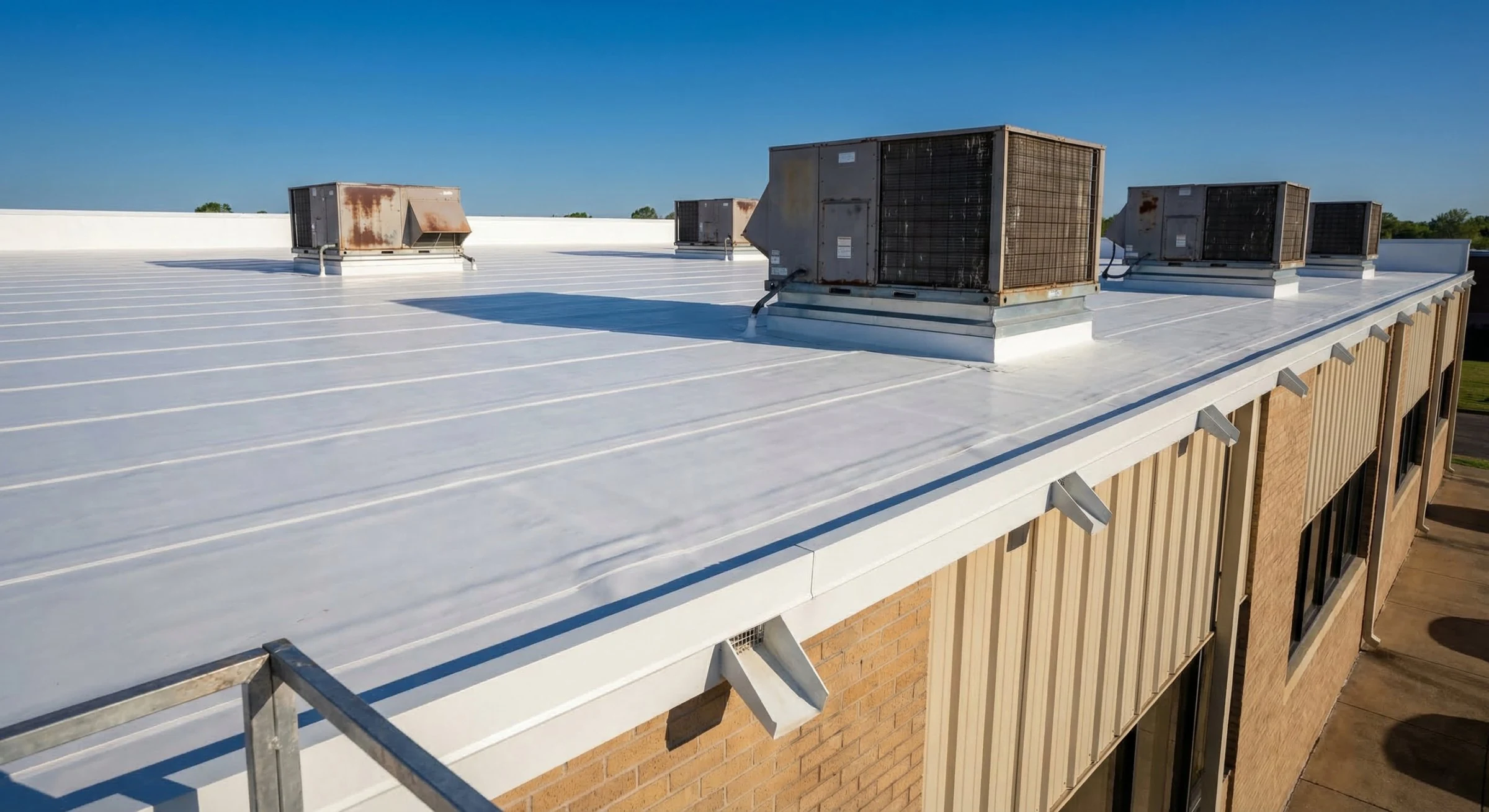
The tradeoff shows up in summer, when black membrane runs hotter and ages a little faster under UV exposure at our elevation. We tell owners this upfront rather than let them find out after ten years that the membrane has degraded faster than a lighter color would have. A white EPDM option exists for owners who want the rubber's flexibility around penetrations without the added heat gain, and we bring that up when a building runs a lot of rooftop cooling equipment.
Field Seams Versus Taped Seams
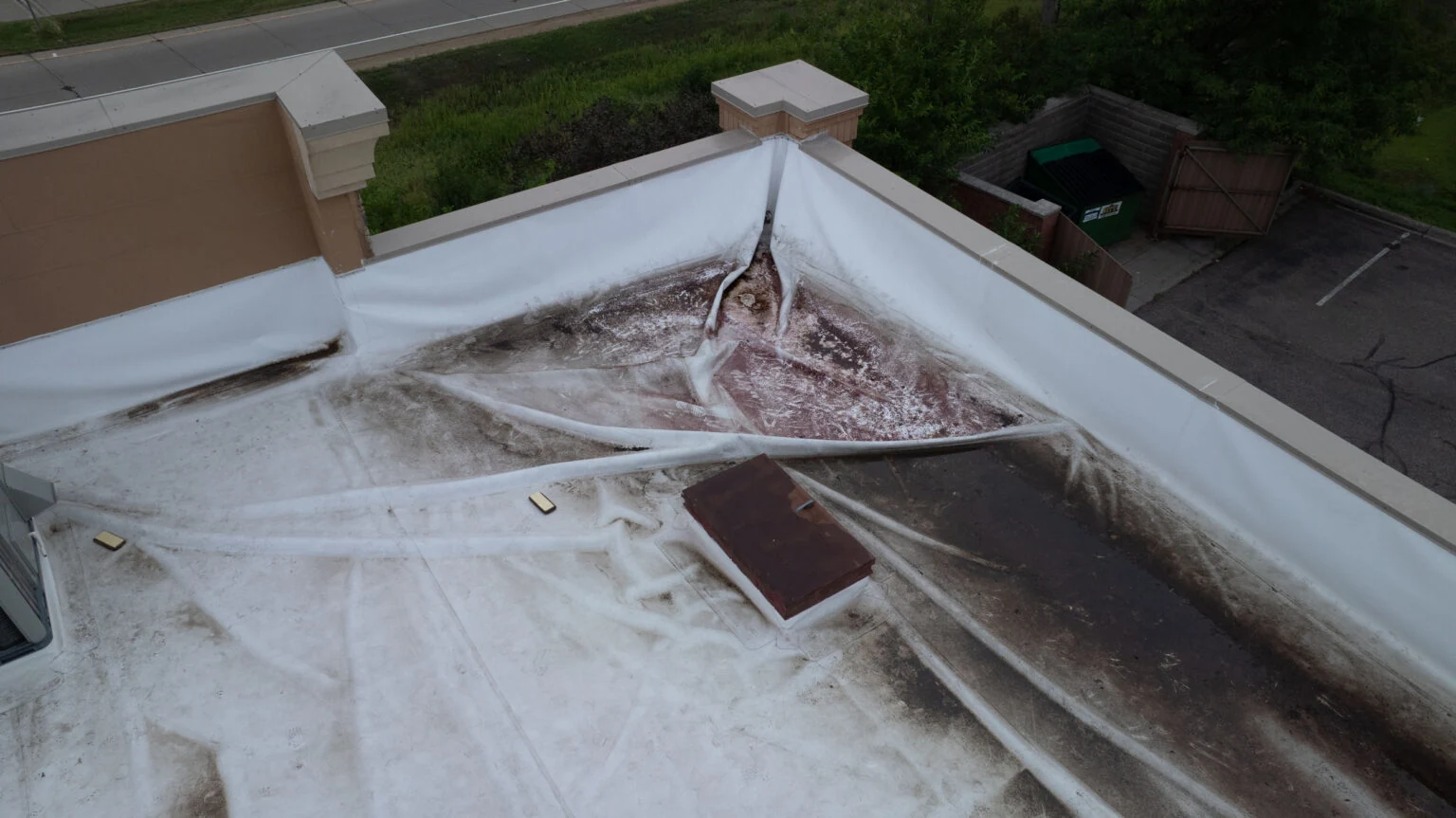
Older EPDM roofs in this market were installed with field-applied seam tape and lap adhesive, and that seam is the first place we check on any inspection. Adhesive seams degrade with age and UV exposure, and once a seam starts to lift, wind gets underneath it fast in a storm.
Newer EPDM installs use factory-applied tape systems that hold up more consistently, and we favor them on any new install we run. On a re-roof over an existing deck, though, we still walk every linear foot of seam before we sign off, regardless of which tape system the roof was originally built with. A hailstorm doesn't have to hit a seam directly to stress it; wind-driven rain finding a lifted seam edge causes just as much interior damage over time.
What We Look for During an EPDM Inspection
Before quoting a repair, recover, or full replacement, we check:
- Seam condition along every lap, including runs that aren't visible from the access hatch
- Flashing integrity around tank, vent, and equipment penetrations
- Membrane shrinkage at the perimeter, a common EPDM aging pattern
- Ponding water locations and whether they're new or long-standing
- Hail bruising, which shows as soft spots rather than visible cracks on rubber
- Insulation condition below the membrane where past leaks may have gone unnoticed
Hail Damage on Rubber Is Easy to Miss
Hail damage on EPDM doesn't always look like damage. A hailstone can bruise the membrane without breaking the surface, leaving a soft spot that won't show up as a visible tear for months or years. That's a problem during insurance documentation, because an adjuster looking for obvious cracking can walk right past bruised membrane that's already been weakened.
We probe suspect areas after storms rather than relying on a visual pass alone, and we photograph bruising patterns against a reference so the density and distribution are clear in the claim file. This matters more with EPDM than with any other membrane type we install.
Rubber Roof Questions We Hear Often
How long does an EPDM roof last in this climate?
A well-maintained EPDM roof can run fifteen to twenty-five years, but hail exposure and UV at our elevation tend to push toward the shorter end of that range without regular inspection and patching.
Can you repair a brewery roof without shutting down production?
Yes, most of our brewery repair work happens around production schedules, not the other way around. We coordinate access to tank penetrations and vent areas so crews aren't underfoot during a brew cycle.
Is black or white EPDM better for our building?
It depends on whether summer cooling load or winter snow shed matters more for your building and the equipment sitting underneath the roof deck. We walk through both scenarios with owners before recommending one, since the right answer changes depending on what's installed below.
How do you find hail damage on a rubber roof if it doesn't crack?
We probe the membrane by hand across the field instead of relying on a visual pass alone, looking for soft or spongy spots that indicate bruising below the surface.
Is EPDM a good fit for a roof with a lot of rooftop penetrations?
Generally yes. Field-applied flashing details make EPDM adaptable to irregular penetration patterns, which is exactly the situation most brewery and industrial roofs present.
Roof
GALLERY