TPO 60-Mil Roofing Systems in Fort Collins, CO
Commercial Roofing
Roof Systems
Why We Spec 60-Mil TPO Over Thinner Membrane Here
Forty-five mil TPO is still sold up and down the Front Range, but on most reroofs we bid in Fort Collins we push clients toward 60-mil. The reason isn't marketing. It's the hail. This stretch of Colorado sits inside hail alley, and a membrane that's fine in Kansas City or Dallas gets punched through here in a single storm.
Mil Thickness and Impact Class
Membrane manufacturers test their products for impact resistance under UL 2218 and FM 4473. Those tests drop steel balls onto the membrane from a set height and grade the result by class, with Class 4 being the top rating most insurers and property managers ask about. Thicker membrane isn't automatically Class 4 rated, but going from 45-mil to 60-mil moves most TPO products into a meaningfully better impact category, and it shows in the field. We've pulled 45-mil roofs three years old with hail bruising through the scrim. The 60-mil jobs we did around the same time on similar buildings are still tight.
We're not saying 60-mil is bulletproof. A big enough hailstone off Longs Peak weather will mark any membrane. But the frequency of small and mid-size hail events here means the extra 15 mils pays for itself over the life of the roof, especially if the building carries a commercial policy that reprices after storm damage.
Wind Uplift on Open Front Range Roofs
Fort Collins gets wind events that don't show up in the brochure weather for Colorado. Downslope wind off the foothills funnels along the Poudre corridor and hits flat commercial roofs broadside, especially on buildings near Harmony Corridor and the open ground out toward Timnath and Wellington. A 60-mil membrane in a fully-adhered or mechanically-fastened assembly carries a higher wind uplift rating than the same layout in 45-mil, because the fastening plates bite into thicker material without tearing loose as easily in gusts.
We size the fastening pattern to the building's height and exposure, not simply a stock spec sheet number. A single-story warehouse off I-25 in Wellington gets a different pattern than a taller office building on College Avenue. Thickness is one input. Fastener density and plate spacing matter just as much once wind gets involved.
UV Exposure at 5,000 Feet
Fort Collins sits close to a mile up, and UV intensity increases with elevation. Thinner membranes chalk out and lose plasticizers faster under that kind of sun load, especially on south and west-facing roof slopes with no parapet shading. We've seen 45-mil field membrane go brittle at the seams years ahead of what a coastal or lower-elevation contractor would expect. Sixty-mil gives the membrane more material to lose before the reinforcing scrim starts to show through, which buys years of service life in a UV environment most manufacturers didn't originally test for.
Freeze-Thaw Cycling and Seam Integrity
Front Range weather swings forty or fifty degrees in a single day more often than people expect. That kind of cycling stresses heat-welded seams, penetration flashings, and any spot where the membrane has to flex. Thicker sheet resists that fatigue better over a twenty-year service window. It's not that 45-mil seams fail outright — it's that they show granular cracking and seam creep sooner, and we end up back on the roof doing warranty-adjacent repair work that a heavier membrane would have delayed.
Where We Install It
Sixty-mil TPO isn't the right call on every building. On low-budget re-covers where the owner just needs ten more years out of a strip retail building, 45-mil with a good fastening pattern can still make sense. We spec 60-mil most often on:
- Buildings with recent hail claims history or an insurer pushing for higher impact class
- Light industrial and manufacturing roofs with heavy rooftop equipment traffic
- School and higher-ed buildings where the roof needs to outlast a bond cycle
- Brewery and food production roofs with grease-laden exhaust near the membrane
- Any roof over 20 feet where wind uplift calculations run tight
- Buildings the owner plans to hold long-term rather than flip in five years
For lower-budget projects, we still walk clients through the tradeoff honestly rather than upselling by default. Some buildings genuinely don't need it.
Installation Details That Matter as Much as Mil Thickness
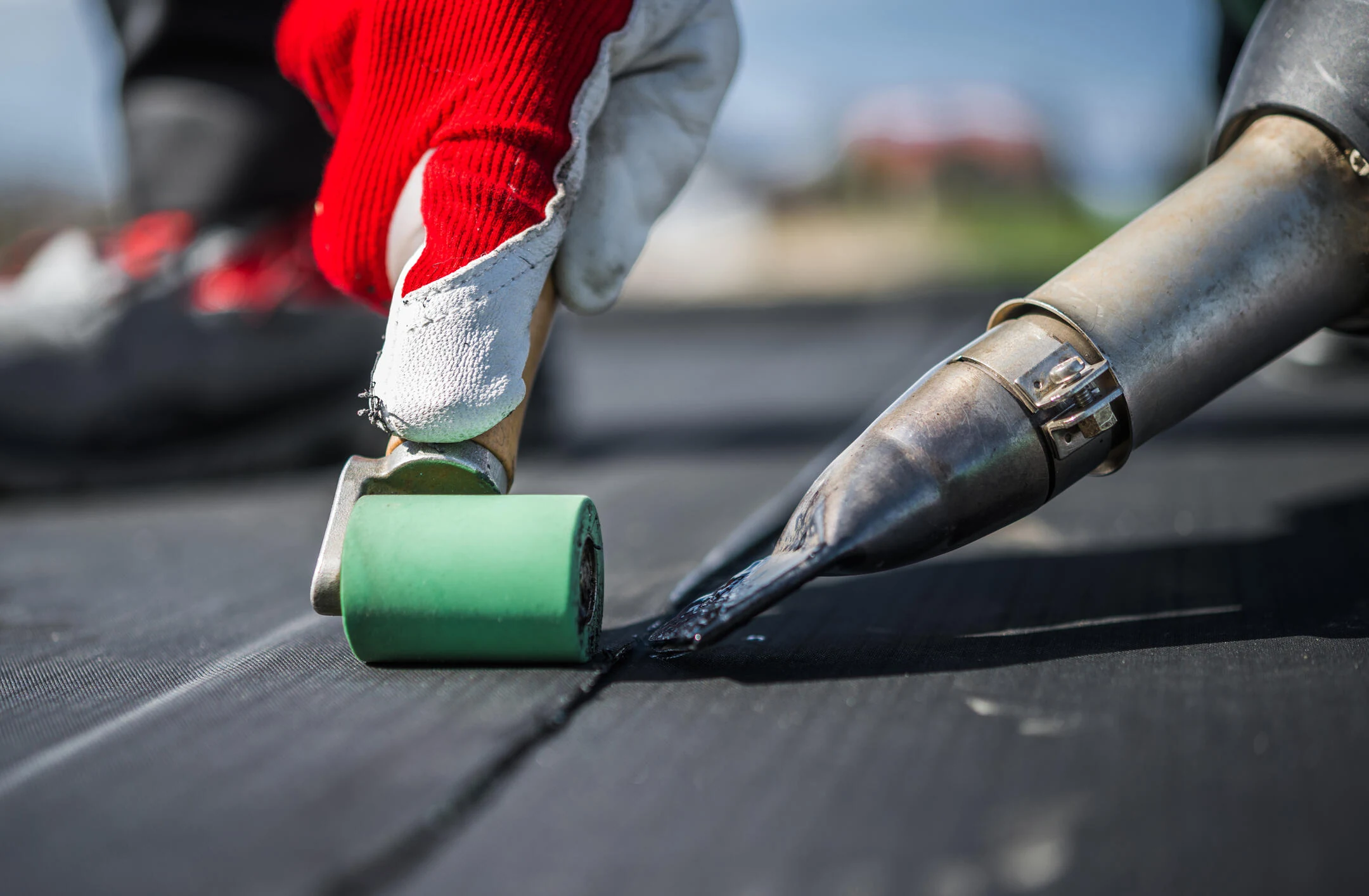
A 60-mil membrane installed with a sloppy hot-air weld or under-lapped seams will fail before a well-installed 45-mil roof. We run a seam probe on every welded seam, not a sample percentage, because a single cold weld under a rooftop unit can turn into a slow leak that takes a year to show up on the ceiling below. Flashing detail at curbs, drains, and parapet walls is where most TPO failures actually start, thickness aside.
Questions We Get About 60-Mil TPO
Does 60-mil cost a lot more than 45-mil?
There's a material cost difference, but it's smaller than most owners expect relative to total project cost, since labor, tear-off, insulation, and flashing work stay the same either way.
Will 60-mil stop hail damage completely?
No membrane is hail-proof. It reduces the frequency and severity of punctures and bruising compared to thinner sheet, which is different from immunity.
Can 60-mil TPO go over an existing roof?
Sometimes, depending on the condition of the existing deck and insulation. We evaluate that during the roof inspection rather than assuming a recover is always the right move.
Is white TPO required, or can it be another color?
TPO is manufactured in white, gray, and tan in most product lines. White is the most common choice here for reflectivity, but it's not mandatory.
How long does a properly installed 60-mil TPO roof last in this climate?
Manufacturers typically warranty these systems in the 20-30 year range depending on the specific warranty tier selected, though actual service life depends heavily on maintenance and rooftop traffic.
Roof
GALLERY