SBS Modified Bitumen Roofing in Fort Collins, CO
Commercial Roofing
Roof Systems
SBS Modified Bitumen: The Roof We Reach for on Old Built-Up Decks
A lot of the older commercial stock around Old Town Fort Collins and Midtown was originally built with tar and gravel roofing, and when those roofs finally give out, SBS modified bitumen is often the cleanest path forward. It's asphalt-based like the original roof, but engineered to flex instead of crack, which matters a lot once you factor in a Colorado winter.
SBS Versus APP: Why the Rubber Matters
Modified bitumen comes in two main chemistries, SBS and APP, and the difference isn't cosmetic. SBS, styrene-butadiene-styrene, is a synthetic rubber blended into the asphalt that keeps the sheet flexible at low temperatures. APP, atactic polypropylene, is a plastic-modified asphalt that handles heat and UV well but stiffens up and loses flexibility as temperatures drop. Fort Collins swings from warm sunny afternoons to hard overnight freezes for a good chunk of the year, and that daily cycling is exactly the condition where APP starts showing brittleness and cracking at seams and flashings years before SBS would. We spec SBS almost exclusively for that reason, even though APP has its own advocates in warmer climates.
Torch-Applied, Hot Mopped, or Self-Adhered
SBS cap sheet can go down three main ways, and the choice usually comes down to the building, the existing substrate, and fire code considerations for the specific site:
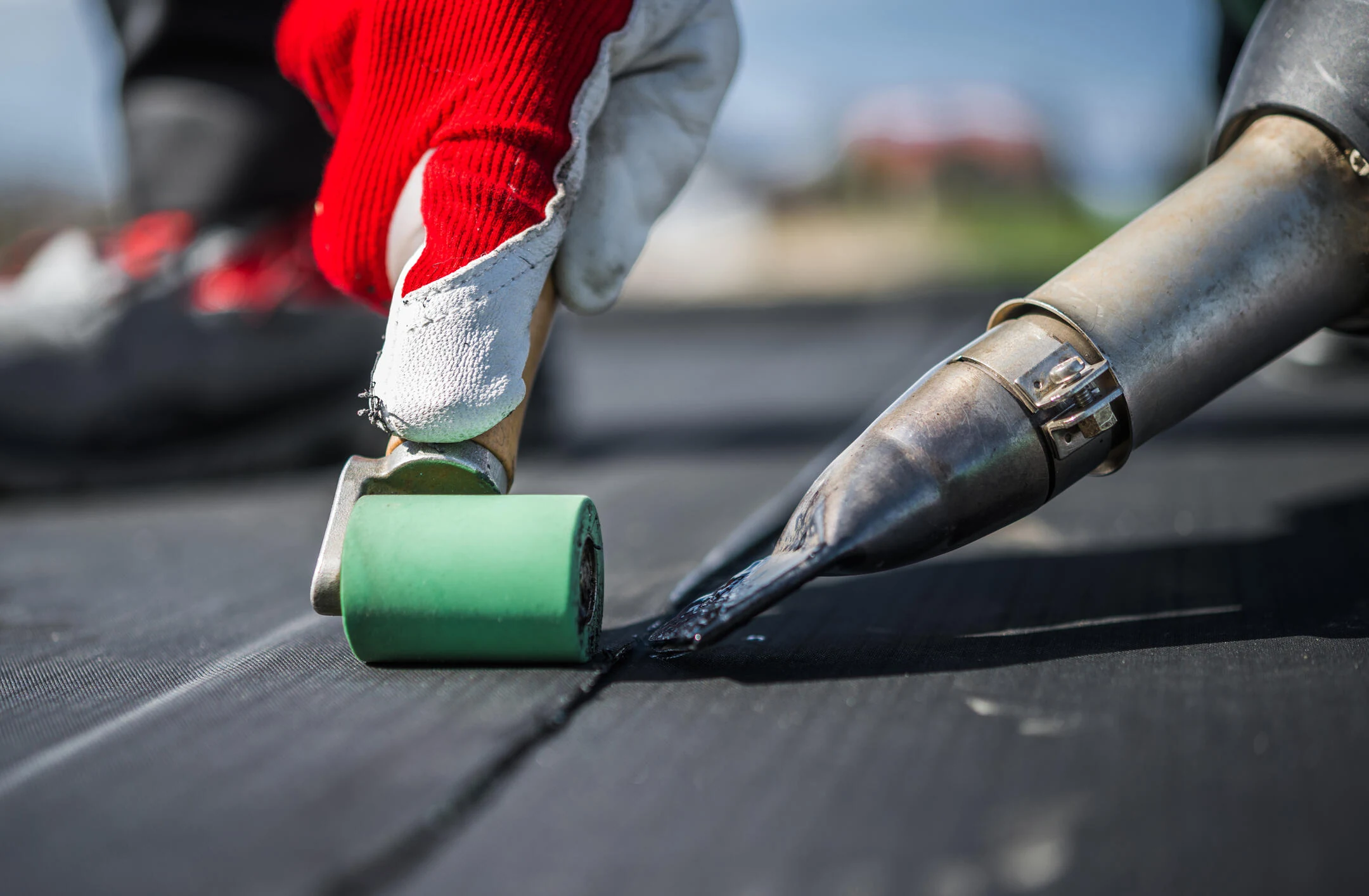
- Torch-applied uses an open flame to melt the bottom layer of asphalt onto the substrate, producing a strong bond but requiring strict fire-watch protocols during and after installation
- Hot-mopped systems use kettle-heated asphalt as the adhesive, common on larger commercial re-roofs with a base sheet and cap sheet assembly
- Self-adhered SBS uses a peel-and-stick backing, which eliminates open flame and hot asphalt on site and speeds up install, though it depends more heavily on deck temperature and cleanliness for a good bond
- Cold-applied adhesive systems are an option on some buildings where torch work isn't permitted, using a cold-process adhesive instead of heat
We choose the method based on the building's occupancy, insurance requirements, and whether the deck is combustible, rather than on whatever's fastest for the crew that week.
Granulated Cap Sheets and Rooftop Traffic
Most SBS cap sheets come with a mineral granule surface that adds UV protection and, just as important on a working commercial roof, foot-traffic durability. Buildings with rooftop HVAC units that need regular service, or ag and light-industrial buildings where maintenance crews are up on the roof more often than the average office building, hold up better under a granulated cap sheet than under an exposed membrane that shows scuffing and wear from foot traffic over time.
Multi-Ply Assembly and Redundancy
A proper SBS system isn't a single sheet. It's typically a base sheet plus a cap sheet, sometimes with an interply sheet on higher-spec assemblies, which gives the roof built-in redundancy that single-ply membranes don't have in the same way. If the cap sheet gets damaged locally by hail or mechanical impact, the base sheet underneath often keeps the building dry until repairs happen. That layered approach is one reason modified bitumen still gets specified on schools and institutional buildings where owners want a wide margin for error between minor damage and an actual leak.
Where We Use It Most
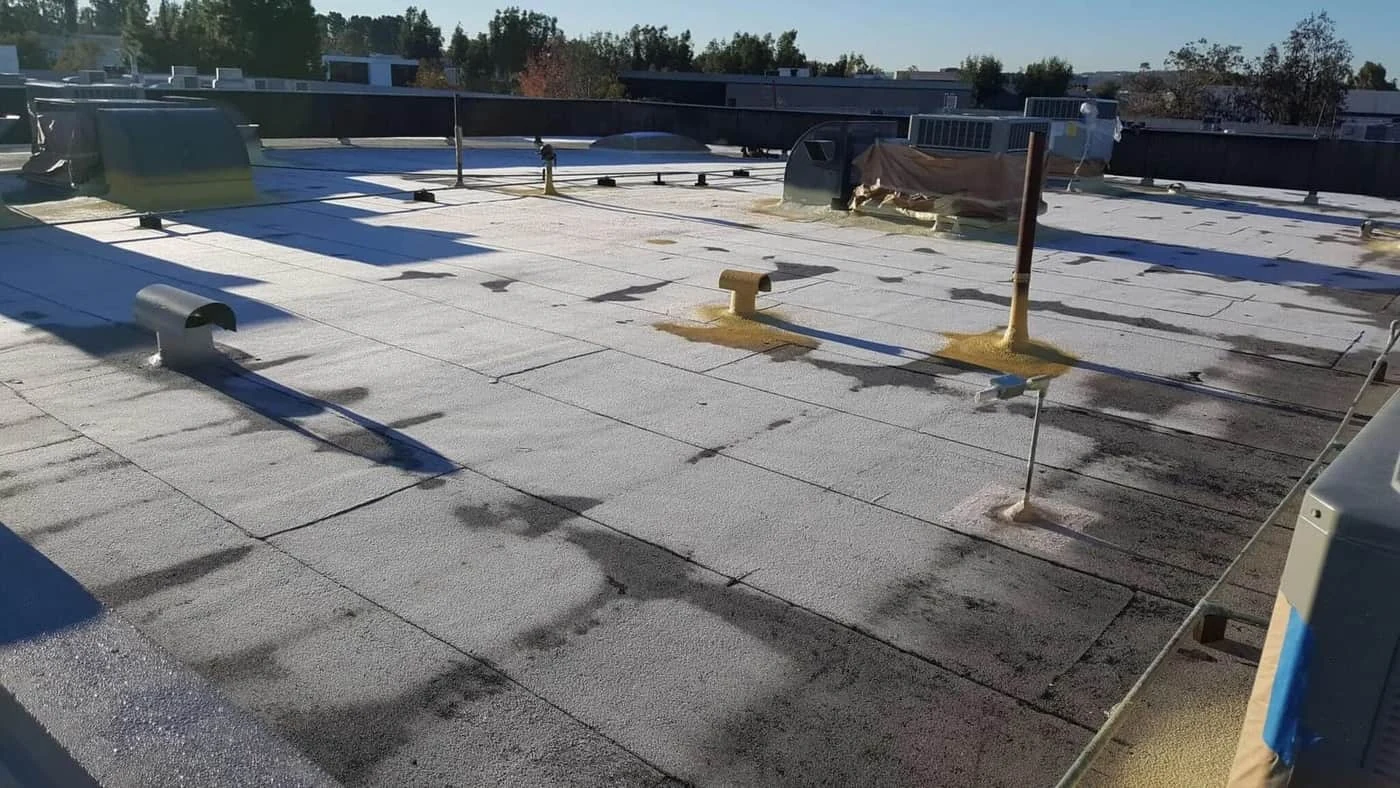
SBS modified bitumen shows up most often on re-cover and re-roof projects over existing built-up roofs in Old Town and Midtown Fort Collins, on schools and government buildings with multi-decade hold periods, and on buildings where the roof deck has a lot of penetrations and equipment curbs that benefit from the flashing flexibility SBS offers at transitions.
Hail, Wind, and Ongoing Maintenance
Granulated SBS cap sheets handle hail reasonably well, since the granule surface and multi-ply construction absorb impact energy before it reaches the deck, though severe hail can still dislodge granules and bruise the underlying sheet. Wind performance depends on the attachment method. Fully adhered and torch-applied systems generally perform well in wind, but we still run building-specific wind uplift calculations rather than assume a stock spec is adequate, especially on taller buildings along open corridors near I-25.
Granule loss over time is normal and expected, but bare spots that expose the underlying asphalt need attention before they turn into UV-accelerated deterioration. We check flashing details and drain areas every visit, since that's still where the majority of modified bitumen leaks originate rather than the open field of the roof.
Questions We Get About SBS Modified Bitumen
Is SBS better than APP for Fort Collins buildings?
For our freeze-thaw climate, yes. SBS retains flexibility in cold weather far better than APP, which matters given how often temperatures swing here.
Can SBS go directly over an old gravel built-up roof?
Sometimes, after the gravel is removed and the substrate is evaluated. In many cases a cover board goes down first to give the new system a clean, even base.
Does torch-applied SBS carry fire risk?
There's inherent risk with any open-flame application, which is why fire-watch protocols and job-site fire extinguishers are standard practice during and after torch work.
How long does an SBS modified bitumen roof last here?
Well-installed multi-ply SBS systems commonly run 20-25 years, with granule and flashing maintenance extending that further.
Is self-adhered SBS as durable as torch-applied?
When installed correctly on a clean, properly primed deck, self-adhered systems perform comparably, though bond quality depends more heavily on installation temperature and surface prep.
Roof
GALLERY