White EPDM Roofing Systems in Fort Collins, CO
Commercial Roofing
Roof Systems
When White EPDM Actually Earns Its Keep Up Here
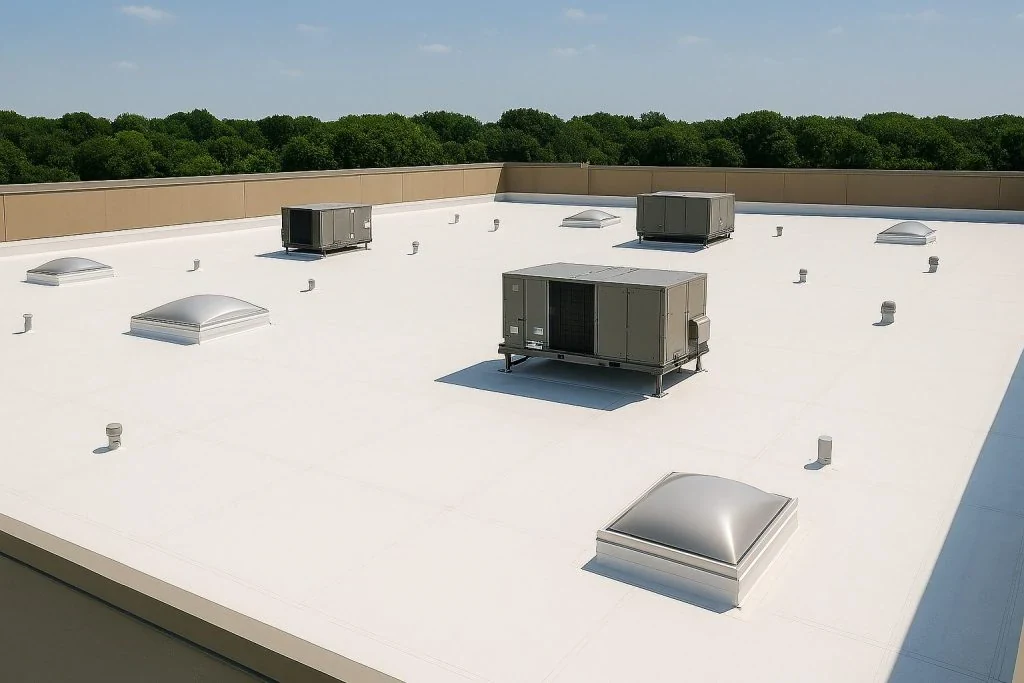
White EPDM is a smaller share of what we install compared to black, mostly because it's a fleece-backed or laminated product rather than the base rubber sheet, and it costs more to buy. On the right building, though, the reflectivity difference is worth the premium, and we'll walk through where that math holds up in this climate and where it doesn't.
Reflectivity Doesn't Mean the Same Thing at 5,000 Feet
Most of the marketing around reflective roofing was written for Phoenix and Houston, not Fort Collins. We get intense UV here because of elevation, but our cooling season is short and our nights cool off fast even in July. A white membrane still reduces surface temperature swings and slows thermal degradation of the sheet itself, but the dramatic utility-bill savings you hear about in desert climates don't translate one to one here, and any owner comparing a Fort Collins quote against a Phoenix case study needs to adjust their expectations accordingly. We tell owners that straight, because a lot of the reflective-roof sales pitch doesn't hold up once you actually run the numbers for a building on Harmony Corridor versus one in Tucson.
Where reflectivity does pay off locally is on buildings with a lot of rooftop equipment that's sensitive to ambient temperature, or on flat-roof retail and office buildings where tenants are already complaining about top-floor cooling costs during the handful of 95-degree weeks we get most summers.
Thermal Shock and Membrane Longevity
Black membrane on a sunny February afternoon here can hit surface temperatures well above the air temperature, then cool rapidly once the sun drops behind the foothills. That kind of daily thermal cycling stresses the membrane and any adhesive bond beneath it over years. White membrane runs cooler at the surface, which reduces that expansion and contraction cycle and can extend service life modestly, independent of any energy-cost argument. On buildings we expect to hold for twenty-plus years, that durability angle sometimes matters more to the owner than the utility bill, particularly on flat roofs with south and west exposure that take the brunt of the afternoon sun for most of the year.
The Dust and Soiling Problem Nobody Mentions
White membrane looks great on day one and shows every bit of dirt after that. Around Greeley, Ault, Eaton, and the ag corridor east of I-25, grain dust and field dust settle on flat roofs constantly, and white EPDM soils faster than TPO's slicker surface. We've seen white roofs on grain-adjacent buildings go visibly gray within two or three seasons. That soiling cuts into the reflectivity gain the owner paid extra for, since a dirty white roof performs closer to a mid-gray roof than a clean white one. For buildings in dusty ag areas, we often recommend black EPDM or a coated system instead and explain why up front rather than sell a product that won't perform as advertised in that setting.
Construction of White EPDM Products
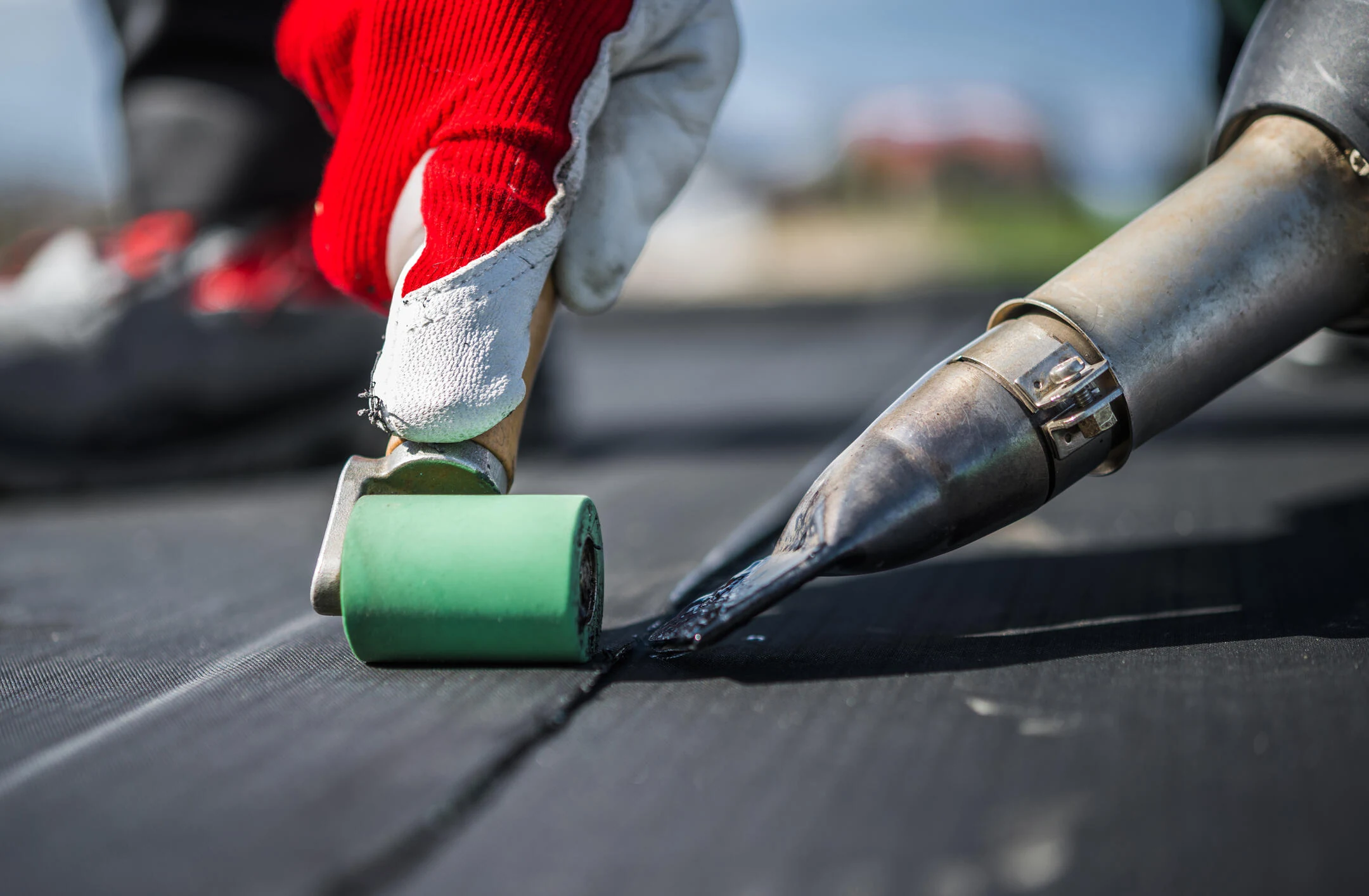
White EPDM isn't simply rubber sheet dyed a different color. Most products on the market are either a white EPDM laminate bonded to the black rubber base, or a fleece-backed system designed for full adhesion. That construction affects how the roof gets installed and repaired:
- Laminated white EPDM needs careful handling since the surface layer can be damaged by foot traffic or sharp debris more easily than solid rubber
- Fleece-backed versions are typically fully adhered, which limits use on structurally marginal decks that can't take a continuous adhesive bond
- Repairs require white-compatible patching material, not standard black EPDM patches, or the repair becomes a visible mismatch
- Seam tape and primer specs can differ slightly from black EPDM systems, so crews need to follow the manufacturer's white-specific data sheet
- Cleaning schedules matter more, since reflectivity degrades faster with surface soiling than with black membrane
Buildings Where We Actually Spec It
We use white EPDM most often on office buildings and medical office space along Harmony Corridor and Midtown Fort Collins, where tenant comfort complaints and top-floor cooling costs are a real, ongoing issue for the property manager. It also shows up on newer construction where the owner wants a specific look from ground level, though on a low-slope commercial roof that's rarely visible from the street.
Cost Versus Black EPDM
Expect white EPDM to run higher than standard black EPDM per square, largely due to the laminate or fleece-backed construction and the fact that it's a lower-volume product for most manufacturers. On a re-cover budget, that premium sometimes pushes owners toward a reflective coating over black membrane instead, which we'll walk through separately when it fits the building better.
Questions We Get About White EPDM
Does white EPDM really lower energy bills in Fort Collins?
Some, particularly on buildings with heavy rooftop cooling load, but the savings are more modest here than in hotter, longer-summer climates. We don't oversell this.
Will it stay white looking over time?
Not without periodic washing, especially near ag dust sources or gravel parking areas. Expect gradual graying without maintenance.
Can black EPDM be coated white instead of buying white membrane?
Yes, a compatible reflective coating over existing black EPDM is often a lower-cost path to the same reflectivity benefit.
Is white EPDM as hail-resistant as black?
The base rubber performs similarly. The laminate or fleece layer adds a bit of surface toughness but doesn't fundamentally change hail behavior.
Does white membrane need different insulation underneath?
Not typically. Insulation selection depends on the deck type and R-value target, not the membrane color.
Roof
GALLERY