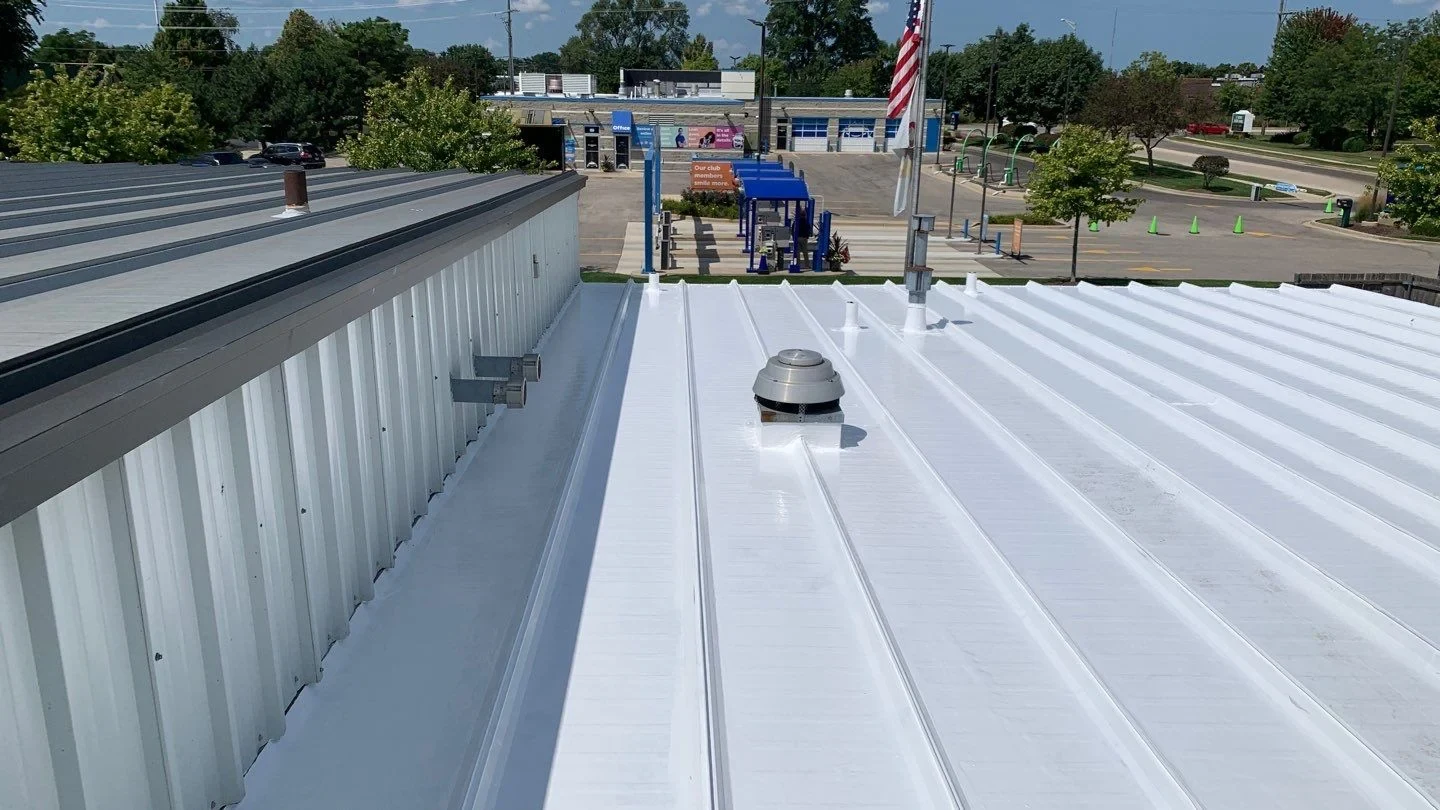
TPO Single-Ply Roofing in Fort Collins, CO
Commercial Roofing
Commercial Roofing Services
TPO Membrane Roofs Over the Harmony Corridor and CSU's Flat-Roof Buildings
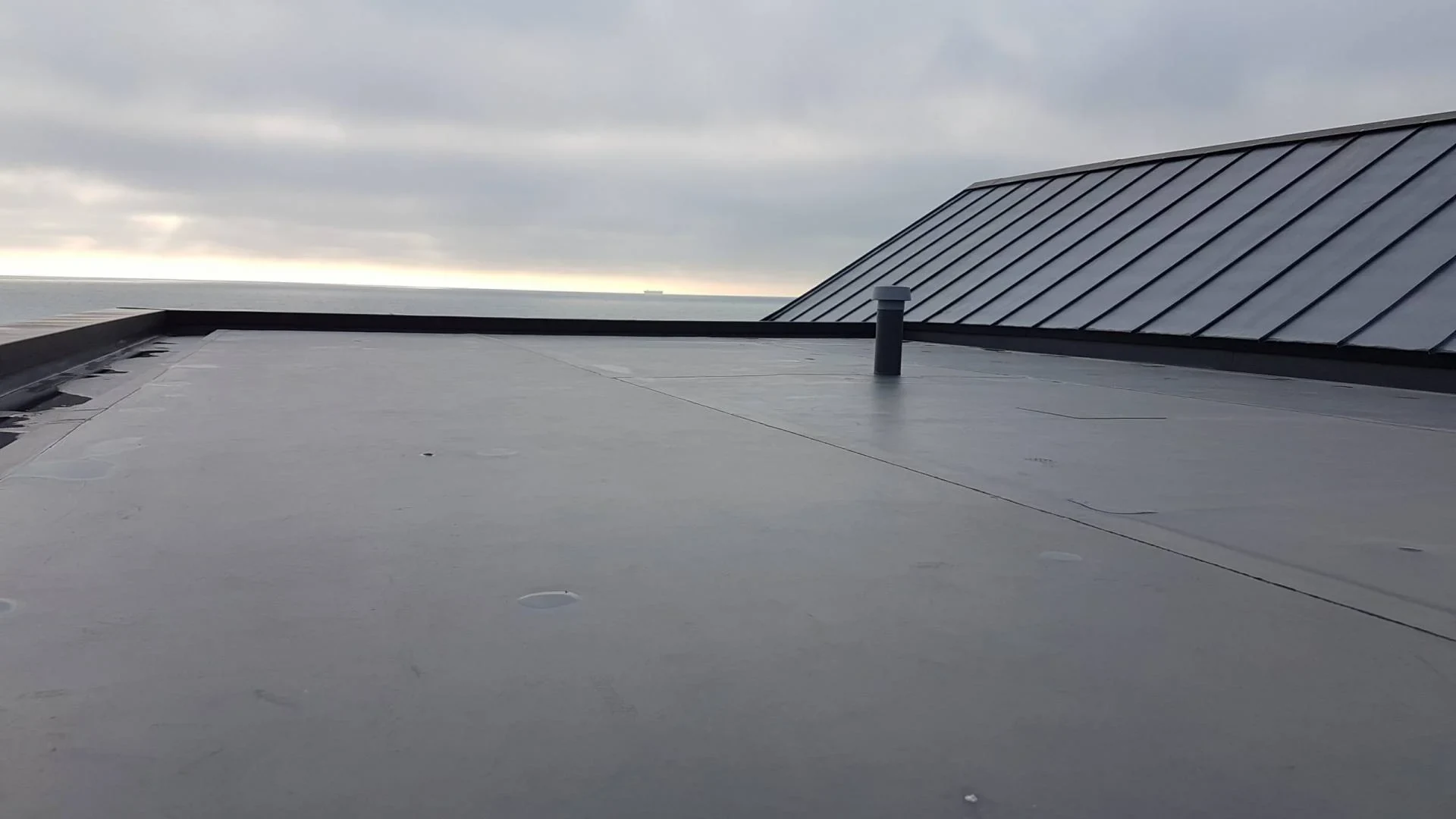
TPO is the membrane we spec most often on the large flat roofs that dominate the Harmony Corridor tech campuses and Colorado State University's newer buildings. It's the roof type that shows up on almost every rooftop-unit-heavy building we bid in this market.
Why Campus and Tech Buildings Default to TPO
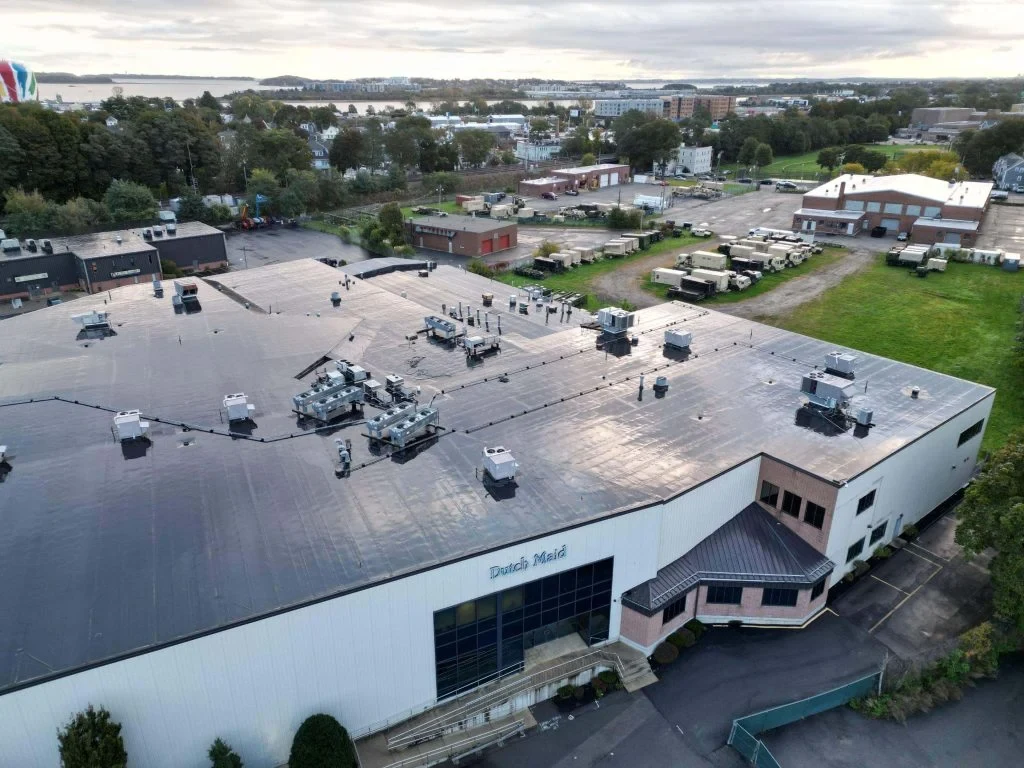
Buildings near Broadcom and the other tech employers along Harmony Road run heavy mechanical loads. Chillers, condensers, and dozens of rooftop units sit on a single roof deck, each one needing a curb, a flashing detail, and a walk pad. TPO's heat-welded seams give us a membrane that holds up to foot traffic between units better than a fully adhered EPDM sheet would.
CSU facilities staff like it for the same reason, plus the white membrane keeps deck temperatures down over labs and mechanical rooms that already run hot from equipment inside. A white roof on a research building matters when there's sensitive lab equipment tied to rooftop condensing units just above it. We've also seen how much easier a white membrane makes visual inspection after a hail event, since bruised or cracked spots show up faster against a light background than they would on a dark EPDM sheet.
60-Mil Versus 80-Mil in a Hail Corridor
This is the conversation we have with almost every owner before signing off on membrane thickness. A 45-mil TPO sheet is cheaper up front, but in a market that sees quarter-size and golf-ball hail most summers, we push owners toward 60-mil as the practical minimum and 80-mil on buildings with high replacement cost or a history of storm claims.
Thicker membrane resists granule loss and bruising better under impact, which matters two ways: it holds up longer between storms, and it documents cleaner after a storm when an adjuster is trying to separate hail damage from normal wear. A membrane that's already thin from age makes that call harder for everyone.
Seam Welding and Rooftop Equipment Penetrations
TPO seams are hot-air welded, not taped or glued, which gives a more consistent bond across a large roof field. On a campus building with forty or fifty penetrations for conduit, gas lines, and equipment curbs, seam quality around those penetrations is usually where a roof fails first. The open field of membrane rarely gives us trouble by comparison.
We run probe tests on welded seams before we leave a job instead of relying on a visual check alone. A seam that looks welded from three feet away can still separate under freeze-thaw cycling if the heat wasn't dialed in right during install.
What We Check Before Recommending TPO
Not every flat roof in this market is a good TPO candidate. Before we spec it, we look at:
- Existing deck condition and whether a recover or full tear-off makes more sense
- Rooftop equipment count and the flashing detail work that comes with it
- Drainage slope and whether ponding water is already a problem
- Membrane thickness relative to the building's hail exposure and claims history
- Insulation R-value given Fort Collins winters and the building's HVAC load
- Whether the roof needs to stay in service during install, which changes phasing
Reflectivity and Front Range Summer Sun
Fort Collins sits above 5,000 feet, and UV exposure at that elevation is harder on roofing membranes than it is at sea level. TPO's white surface reflects a good share of that solar load back off the roof instead of soaking it into the deck, which helps on buildings where rooftop mechanical equipment is already working against summer heat gain.
That reflectivity fades over time as the membrane ages and picks up dirt, so we tell owners to expect a gradual falloff rather than a permanent white surface. Regular rinsing during maintenance visits helps but doesn't stop the aging curve entirely. Dust from nearby agricultural fields and construction sites along the Harmony Corridor speeds up that discoloration faster than in a purely urban setting, which is one more reason we schedule cleaning as part of routine maintenance rather than treating it as optional.
TPO Questions From Facilities Managers
Can TPO handle the rooftop unit density we have on our building?
Yes, that's the main reason we spec it for equipment-heavy roofs. The limiting factor is usually flashing detail quality around each curb, not the membrane itself.
How does TPO hold up against hail compared to EPDM?
Both can perform well at adequate thickness, but TPO's welded seams tend to show hail impact more clearly during inspection, which can help during claim documentation. Neither membrane is hail-proof at any thickness.
Does a white membrane actually lower our energy costs?
It can reduce rooftop unit run time in summer by lowering deck surface temperature, but the effect depends on insulation levels below the membrane and the building's overall HVAC setup.
How often does a TPO roof need seam inspection?
We recommend at least once a year, plus after any hail event large enough to leave visible marks on the membrane or surrounding equipment. Buildings with a heavy count of rooftop units warrant a closer look at flashing details during that same visit, since curb flashing typically loosens before the membrane field shows any problem.
Can you install TPO over an existing roof without a full tear-off?
Sometimes, depending on deck moisture and code requirements for the building. We check that before quoting a recover instead of a full replacement.
Roof
GALLERY