Grocery Store Roofing in Fort Collins, CO
Commercial Roofing
Commercial Project Types
Grocery Store Roofing for Fort Collins and Northern Colorado Chains
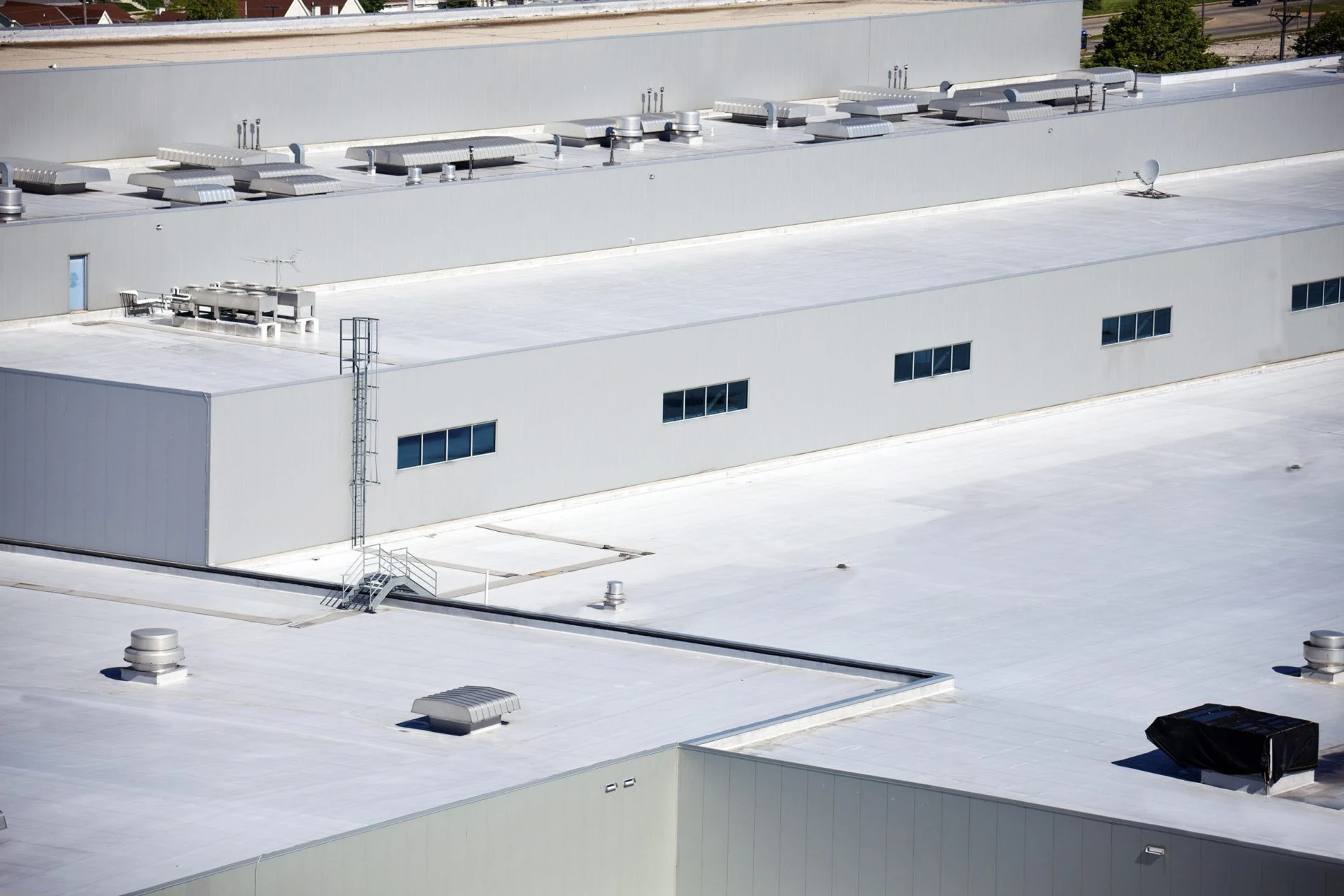
Grocery stores around Fort Collins, from full-service chains to natural and specialty formats, put more rooftop equipment weight and more drainage demand on a roof than almost any other retail category. A grocery roof is really a mechanical platform with a sales floor underneath it.
Refrigeration and Condenser Loads on Grocery Roofs
Every case of refrigerated and frozen product inside a grocery store is backed by condensing equipment sitting on the roof, and that equipment runs continuously, not on a thermostat cycle like standard HVAC. The curbs supporting those units see constant vibration and thermal stress that regular rooftop package units do not.
We inspect condenser curb flashing and fastener patterns on grocery roofs on a tighter schedule than a typical retail building, because the failure mode here is different: a curb that works loose under a refrigeration unit causes more than a leak, it can also affect the store's ability to hold temperature on product below.
Loading Dock and Bakery/Deli Exhaust Penetrations
Grocery stores run bakery ovens, deli exhaust hoods, and loading dock canopies that each add their own penetration profile to a roof already carrying dozens of refrigeration units. Bakery exhaust in particular runs hot and greasy, similar to restaurant exhaust, and needs flashing detail that accounts for that exposure rather than a standard roof vent detail.
We map penetration density by department when we inspect a grocery roof, since the section over the bakery and deli wears differently than the section over dry grocery aisles, even though it is the same continuous membrane.
24-Hour Operations and Limited Access Windows
A lot of grocery locations in this market run long hours or close to 24-hour operations, which narrows the practical window for roof access that does not interfere with deliveries, stocking, or customer parking. We coordinate access around overnight delivery schedules and early morning stocking windows so crew staging does not block loading docks when trucks need them.
Noise from tear-off work also matters more on a grocery roof than people expect, since store operations run through the night in many locations and a noisy crew overhead during restocking hours creates real friction with store management.
Customer parking capacity is another constraint at a busy grocery store, particularly around weekend shopping peaks, so we keep material staging and dumpster placement in whatever low-traffic corner of the lot the store manager can point us to instead of taking up prime spaces near the entrance.
Remodel and Renovation Tie-Ins
Grocery chains remodel more frequently than most retail categories, often reconfiguring department layouts and adding equipment like expanded cold cases or online order fulfillment areas. Every remodel cycle tends to leave its mark on the roof above it, whether that is a new curb for updated refrigeration or a patched section from equipment removal.
We treat grocery roof assessments as a layered history rather than a single snapshot, identifying which sections correspond to which remodel era so a repair plan accounts for materials and systems that may not match from one part of the roof to another.
Online order fulfillment areas, where staff pick and stage curbside pickup orders, have become common additions inside grocery stores in recent years, and some of those buildouts added new rooftop refrigeration to support expanded cold storage for that operation. We check whether that added equipment was tied into the existing roof system correctly or simply set on top of it without proper flashing.
- Full-service grocery anchors with dense refrigeration equipment
- Discount and warehouse-club format stores
- Natural and specialty grocery formats
- Convenience store and attached fuel center canopies
- Grocery-anchored strip center roof sections
- Cold storage and distribution annex roofs behind the sales floor
Drainage Sized for a Heavily Penetrated Roof
With this many penetrations packed into one roof, drainage paths get more complicated than a simple flat field draining to a few scuppers. We check that drains have not been effectively boxed in by equipment added over the years, since a drain that was clear when the store opened can end up surrounded by newer curbs that slow water getting to it.
Snowmelt off condenser and refrigeration units also behaves differently than snowmelt off a plain roof field, since waste heat from that equipment can create localized melt-and-refreeze cycles right around the curbs. We watch for ice buildup in those specific zones during winter inspections rather than assuming the whole roof sheds snow evenly.
Grocery Store Roofing Questions We Hear
Why do grocery roofs need more frequent inspection than other retail?
The density of continuously running refrigeration equipment puts more constant stress on curbs and fasteners than typical retail HVAC, so we check those areas on a tighter schedule.
Can you work around 24-hour store operations?
Yes. We coordinate access with overnight delivery and stocking schedules and keep staging clear of loading docks during active truck windows.
Do bakery and deli sections need different roof detailing?
They do. Bakery and deli exhaust runs hot and greasy similar to restaurant exhaust, so we flash those penetrations differently than a standard roof vent over dry grocery.
How do remodels affect the roof over time?
Each remodel cycle tends to add or move equipment, leaving a layered history of curbs and patches. We map that history so a repair plan accounts for what is actually up there.
Can equipment additions over the years block roof drains?
They can. We check whether drains have become surrounded by newer curbs that slow water reaching them, since that is a common issue on grocery roofs with a long equipment history.
Roof
GALLERY