Spray Polyurethane Foam Roofing in Fort Collins, CO
Commercial Roofing
Roof Systems
Spray Foam Roofing: Built-In Insulation, Narrow Install Window
SPF roofing does something most other systems can't. It adds structural insulation and drainage slope in the same application, sprayed directly onto the existing deck or substrate and then coated for UV and weather protection. On the right building, particularly one where winter heat loss is the bigger cost driver than summer cooling, that combination is hard to match.
How the System Actually Works
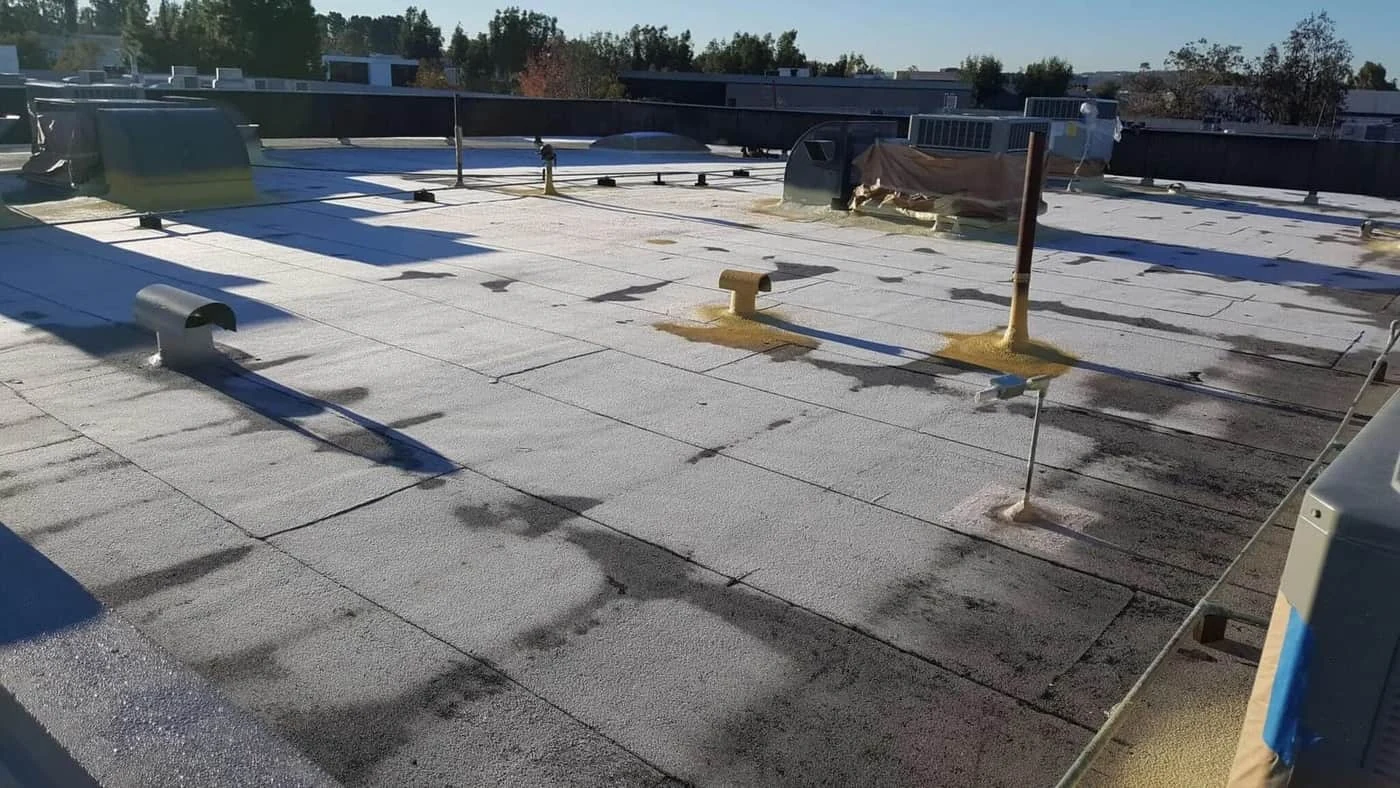
Two-component polyurethane foam gets sprayed on site, expanding and curing into a rigid closed-cell layer that follows the contour of the deck below it. Crews build up thickness in the areas that need it to correct low spots and create positive drainage toward existing scuppers or drains, something a flat membrane laid over a flat deck can't do without tapered insulation board underneath. Once the foam cures, it gets a protective coating, usually silicone or acrylic depending on the building's exposure, along with a granule or aggregate surface for UV protection and foot-traffic durability.
Insulation Value That Pays for Itself in a Heating Climate
Fort Collins has more heating degree days than cooling degree days across a typical year, which flips the usual reflective-roof energy conversation on its head. SPF's high R-value per inch adds real insulation to buildings with older, thin, or degraded existing insulation, cutting winter heat loss in a way that a thin membrane re-cover simply can't. On buildings with rooftop HVAC units working overtime through a Front Range winter, that insulation upgrade shows up directly in utility costs.
The Weather Window Is the Hard Part
This is the tradeoff we're most direct about with owners considering SPF. The material needs a dry substrate, low humidity, and a narrow temperature band to spray correctly, and it can't go down in wind because overspray drifts and creates liability for neighboring vehicles, buildings, and landscaping. Front Range spring weather is genuinely difficult for this work: moisture off spring snowmelt, unpredictable wind funneling down off the foothills, and rapid temperature swings within a single day. We plan SPF projects around stable weather windows, usually late summer or early fall, rather than trying to force the schedule into a season that fights the material.
Hail Performance Depends Entirely on the Coating
Cured foam on its own is a rigid, somewhat brittle material, and the coating and granule surface over it are what actually determine hail performance. A thin coating with light granule embedment can crack or lose surface material under hail impact, exposing the foam beneath. We spec coating thickness and granule embedment with hail alley exposure specifically in mind, and on buildings with a real hail claims history we push for a heavier-mil coating system rather than the manufacturer's baseline spec.
Where SPF Fits Best
The combination of insulation and self-forming drainage makes SPF a strong fit for specific building types more than a general-purpose choice:
- Warehouse and distribution buildings with large flat roof areas and poor existing drainage
- Ag storage and grain-adjacent buildings around the Greeley and Ault corridor with irregular roof geometry
- Older buildings with thin or compressed insulation where an energy upgrade is part of the project goal
- Roofs with chronic ponding caused by structural low spots that tapered board alone can't fully correct
- Buildings with a lot of curved or irregular penetrations where foam's ability to form around shapes reduces flashing complexity
Maintenance, Recoat Cycles, and Cost
SPF systems are a maintenance commitment, not a one-and-done install. The protective coating needs periodic recoating, typically every 10-15 years depending on coating type and UV exposure, and any foam that gets exposed through coating wear or impact damage needs prompt repair before moisture gets underneath it. Neglected SPF roofs deteriorate faster than neglected membrane roofs because exposed foam absorbs water readily once the coating is compromised. We build recoat intervals into the maintenance plan up front rather than let owners find out the hard way, with a walk-through scheduled the same way we'd schedule any other preventive roof visit.
Installed cost for SPF varies more than membrane systems because of the site-specific spray thickness required to correct drainage, along with the coating package selected. For buildings that need both insulation improvement and drainage correction, the combined cost of foam versus doing tapered insulation and a separate membrane system separately often comes out comparable, with SPF adding the insulation benefit as part of the same scope. Owners weighing SPF against a standard TPO or EPDM re-roof should factor the avoided cost of a separate tapered insulation package into the comparison rather than looking only at the raw price per square.
Questions We Get About Spray Foam Roofing
Can SPF go over an existing membrane roof?
In many cases yes, provided the existing substrate is dry and structurally sound. We run a moisture survey first, the same as we would before any recover project.
Is spray foam roofing noisy or disruptive to install?
The spraying itself is fast, but wind and weather delays are common here, so scheduling can shift more than with a membrane install.
How does SPF handle Fort Collins hail?
Performance depends heavily on coating thickness and granule embedment. We spec heavier coating packages on buildings with real hail exposure history.
How often does the coating need to be redone?
Typically every 10-15 years, sooner in high-UV, high-hail-exposure locations, as part of ongoing roof maintenance.
Does SPF add much weight to the existing roof structure?
Cured foam is lightweight relative to its insulation value, generally less of a structural load concern than tapered insulation board built up to the same thickness.
Roof
GALLERY