Insurance Documentation Support in Fort Collins, CO
Commercial Roofing
Commercial Roofing Services
Roof Documentation for Fort Collins Commercial Insurance Claims
When a hailstorm or wind event damages a commercial roof and a claim gets filed, the documentation of what actually happened on that roof carries a lot of weight. We build that documentation — photographs, measurements, and written findings — for Fort Collins property owners and managers working through the insurance process after storm damage. We don't handle the claim itself and we don't speak for the insurer; we document the roof accurately and hand over a record that holds up to scrutiny.
This page covers the documentation itself. For the full claim process — meeting the adjuster, building a complete repair scope, and what to do if a claim comes back denied or underpaid — see our commercial roof insurance claims page. Peril-specific detail is on our hail damage claims, wind and storm damage claims, and snow and ice damage claims pages.
What Good Roof Documentation Actually Looks Like
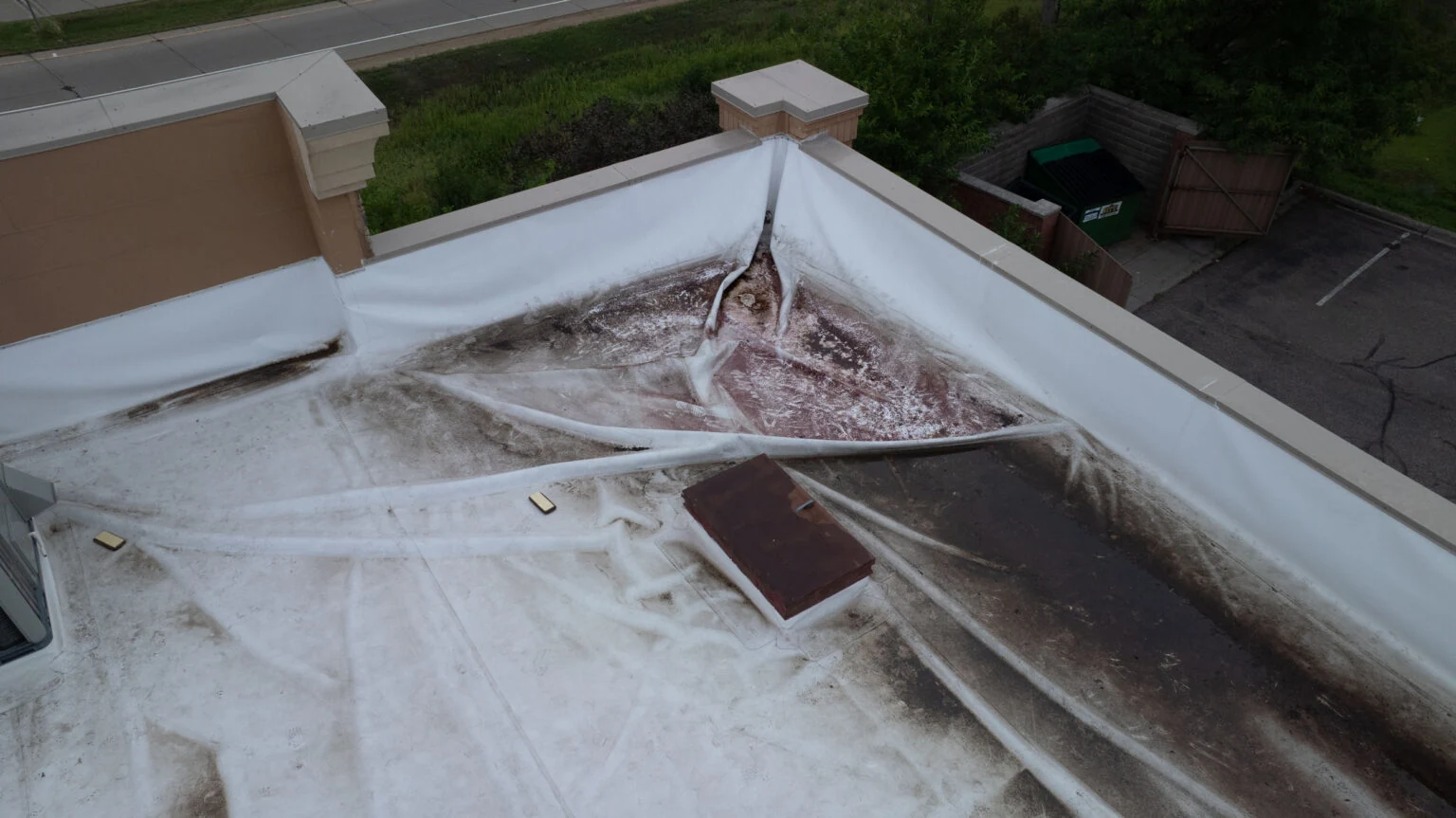
A useful damage record isn't a handful of phone photos taken from the parking lot. It's a systematic walk of the roof with every impact point located, photographed close and from a reference distance, and logged against the roof's layout. We note membrane type, approximate roof age where determinable, and the condition of drains, flashing, and edge details alongside the primary damage findings, because adjusters reviewing a claim want the full picture of the roof's condition, beyond the storm event viewed in isolation.
We keep our documentation factual and specific. We describe what we observe — split membrane, fractured scrim, granule loss, dented edge metal — without characterizing cause in ways that go beyond what the physical evidence supports. That specificity is what makes documentation credible during review, on either side of a claim.
Cosmetic Versus Functional: Why This Distinction Drives the Whole Process
Insurance claims for hail damage almost always come down to this question: does the damage affect the roof's ability to keep water out, or is it surface marking that doesn't compromise performance? We separate every finding into one of those two categories in our reports, with photo evidence supporting each classification. This is the same distinction covered in more detail on our storm damage repair page, and it's the backbone of any credible damage assessment.
We're not going to inflate cosmetic marking into functional damage to make a stronger-looking claim, and we're not going to understate functional damage either. Both approaches undermine the documentation's value. Our job is accuracy, and accurate documentation is what actually holds up when a claim gets reviewed closely.
Working Alongside Adjusters
We're glad to walk a roof with an insurance adjuster and provide our documentation directly for their review, and we do that regularly for Fort Collins property owners going through the claims process after hail season. We answer questions about what we observed and how we classified it. What we don't do is predict what an adjuster will approve, negotiate claim value, or represent that a particular outcome is likely — that's outside what a roofing contractor can honestly speak to, and any contractor promising claim outcomes should be a red flag, not a selling point.
Timing and the Front Range Hail Calendar
Most hail damage along the I-25 corridor happens in a fairly narrow window — late spring through midsummer — and claims filed in that window often compete with a backlog of other storm-damaged buildings across the region. Documentation gathered promptly, before weather or additional storms complicate the picture, tends to be the clearest and most useful record. We prioritize storm-damage documentation calls during hail season for exactly this reason, whether the property is in Fort Collins proper, out toward Loveland and Greeley, or in the newer industrial areas around Windsor and Timnath.
What We Provide
- Photo documentation of every impact point with location reference
- Written classification of cosmetic versus functional damage
- Notes on membrane condition, roof age, and drainage system status
- Edge metal and flashing condition documented alongside field damage
- Availability to walk the roof directly with an adjuster
- A record delivered promptly enough to support an active claim timeline
What This Service Is Not
We want to be direct about scope. This isn't public adjusting, and we're not licensed to negotiate a claim on an owner's behalf. It's roof-specific documentation from people who are on commercial roofs across Larimer and Weld County constantly and know what genuine hail impact looks like versus surface wear or prior damage. Some owners pair our documentation with a public adjuster or attorney for the negotiation side of a large claim — that's a separate decision entirely, and one we stay out of.
Insurance Documentation Questions From Fort Collins Owners
Will your documentation guarantee my claim gets approved?
No, and we won't tell you it will. We provide an accurate, detailed record of the roof's condition. What an insurer does with that record is between the owner and the insurance company.
How soon after a storm should I have the roof documented?
As soon as reasonably possible. Weather, additional storms, and normal roof traffic can all change what's visible, so documentation gathered early is generally the clearest.
Can you document damage on a roof you didn't originally install or maintain?
Yes. We document based on what we find during the walk, regardless of installation history.
Do you write a report I can send directly to my insurance company?
Yes, our documentation is built to be shared directly with an adjuster or insurer as part of the claim record.
What if the adjuster's assessment differs from your documentation?
That happens sometimes, and it's part of why thorough photo evidence matters — it gives both sides something concrete to reference rather than relying on differing recollections of the roof's condition.
Roof
GALLERY