Metal R-Panel Roofing in Fort Collins, CO
Commercial Roofing
Commercial Roofing Services
Exposed-Fastener R-Panel Roofs for Weld County Ag and Oilfield Buildings
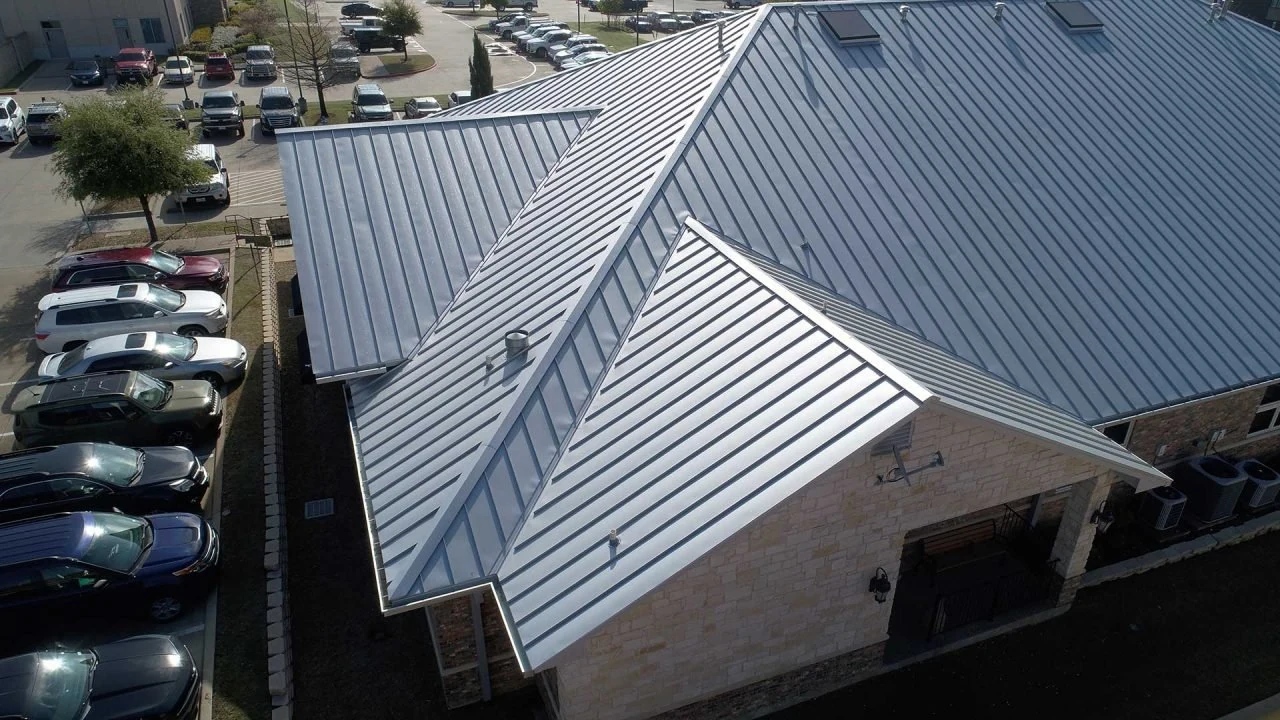
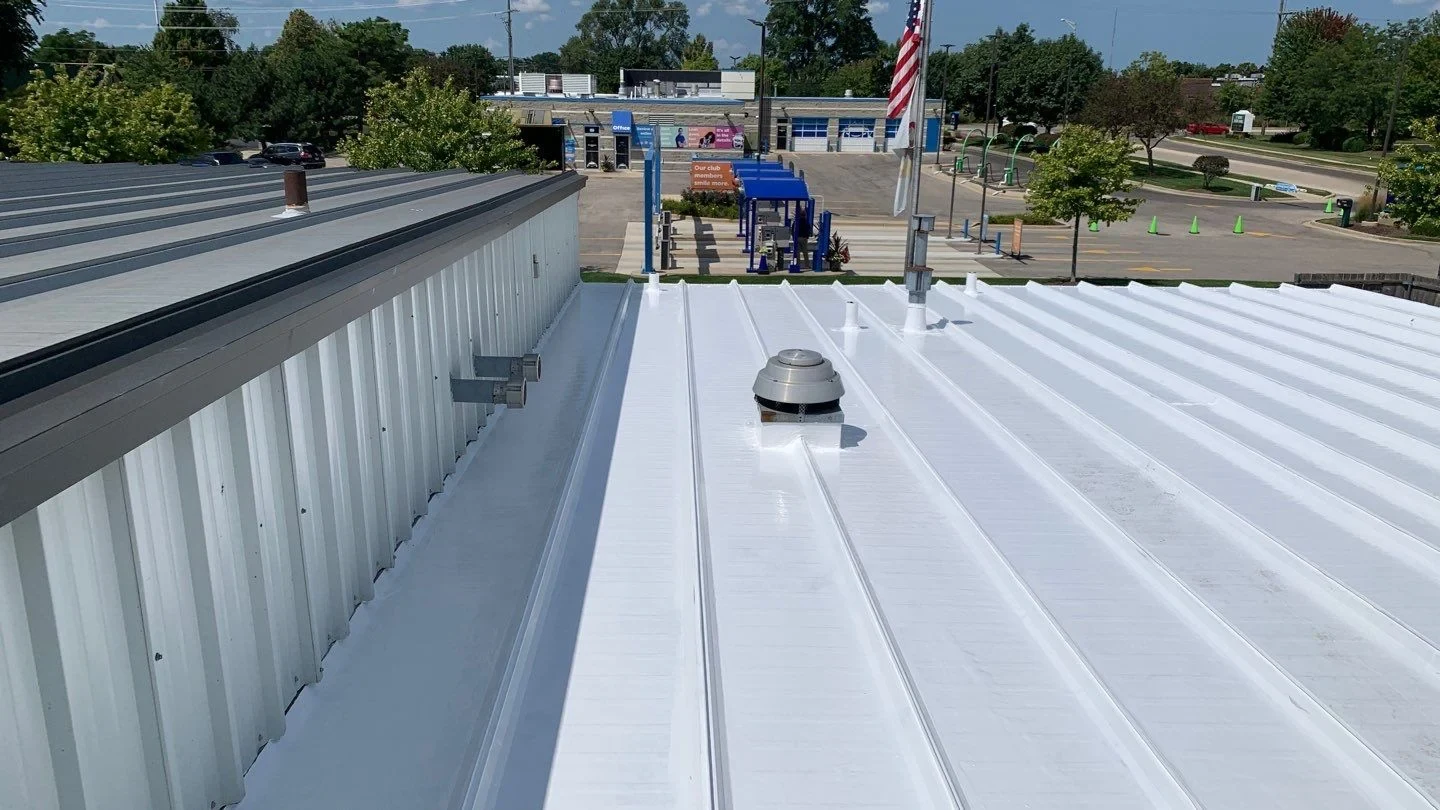
R-panel is the workhorse metal roof out through Weld County's ag and oilfield service territory. It's cheaper per square foot than standing seam and covers large spans fast, which is exactly what a lot of the pole barns, storage buildings, and equipment yards around Milliken, Platteville, and Mead need.
Why R-Panel Fits Ag and Oilfield Buildings
Oilfield service operations along the DJ Basin corridor and ag businesses running grain storage or equipment sheds don't usually need architectural polish on their roofs. They need coverage over a large footprint at a price that makes sense for a working building, and exposed-fastener R-panel delivers that better than any concealed-fastener or membrane system.
These buildings also tend to be simple rectangular structures with straightforward roof geometry, which is where R-panel performs best. Complicated rooflines with a lot of valleys and transitions favor other systems, but a long, unbroken span over a storage building or shop is exactly what R-panel is built for.
Exposed Fasteners: The Tradeoff Owners Need to Understand
R-panel's fasteners go through the panel face into the purlins below, and every one of those penetrations is a potential leak point once the neoprene washer under the screw head ages and cracks. That's the honest tradeoff for the lower material and install cost compared to standing seam's concealed fastener system.
We tell owners upfront that an R-panel roof needs fastener inspection on a regular schedule, not a one-time install and forget approach. Catching backed-out or failed fasteners before they leak is far cheaper than dealing with water damage to stored equipment or ag product underneath.
What We Check on an R-Panel Roof Before Quoting Work
Before we price a new R-panel roof or a fastener remediation job, we look at:
- Purlin spacing and condition, since fastener holding power depends on solid framing underneath
- Age and condition of existing fasteners and washers if this is a re-roof or repair
- Roof slope and how it affects water shedding at side laps
- Any rooftop equipment or vent penetrations that need separate flashing details
- Building use, since stored ag product or equipment changes the cost of a leak versus an empty storage building
- Whether re-fastening the existing panels makes more sense than a full replacement
Hail Impact on Exposed-Fastener Panels
R-panel dents under hail the same way heavier gauge metal roofs do, and on a lighter gauge panel that denting can be more pronounced. The bigger hail concern on this roof type isn't the panel field, it's fastener washers. Hail impact near a fastener can crack an already-aged washer that was otherwise holding fine, turning a roof that wasn't leaking into one that is within a season.
We recommend a fastener-focused inspection after any significant hailstorm on R-panel roofs specifically, separate from the general panel inspection we'd run on any metal roof. High wind events out on the open plains east of Fort Collins add a related concern, since repeated panel flex during a windstorm loosens fasteners gradually even without any hail involved, and that wear compounds over multiple storm seasons rather than showing up all at once.
Re-Fastening Versus Full Replacement
A lot of R-panel roofs in this market are candidates for re-fastening rather than full tear-off, especially when the panels themselves are still structurally sound and the problem is isolated to failed washers or backed-out screws. We run that comparison for owners rather than defaulting to a full replacement quote, since re-fastening can extend a roof's service life at a fraction of the cost.
That said, once panel corrosion or widespread denting shows up alongside fastener failure, re-fastening stops making financial sense and we say so.
Sourcing Panels for a Growing Weld County Fleet
A lot of owners running multiple ag or oilfield service buildings across Weld County want panel profiles and colors that match across their whole property fleet, especially operators who've added buildings incrementally over the years as their business grew. We keep track of common R-panel profiles and finish colors used on existing buildings so a new structure or a partial re-roof doesn't end up an obvious mismatch next to the original.
Sourcing gets harder on older buildings where the original panel profile has been discontinued or the manufacturer has changed rib spacing on their current product line. We flag that early in the estimating process rather than let an owner find out after the job starts that an exact match isn't available.
Questions on R-Panel Metal Roofing
How often should fasteners be inspected on an R-panel roof?
We recommend at least annually, plus after any hail event significant enough to leave visible marks on the panel field.
Is R-panel a good fit for a building with occupied office space rather than pure storage?
It can be, but insulation and condensation control matter more on occupied space. We spec the assembly differently than we would for an unconditioned storage building.
Can you re-fasten an R-panel roof without replacing the panels?
Often yes, if the panels themselves are still sound. We check for corrosion and panel deformation before recommending re-fastening over full replacement.
Does R-panel hold up as well as standing seam in a hailstorm?
Generally not as well at comparable gauge, since exposed fasteners add a failure point that concealed-fastener systems don't have. The cost savings is the tradeoff.
What's the typical lifespan of an R-panel roof out in Weld County's climate?
It varies a lot based on maintenance and fastener upkeep. A roof with regular fastener inspection outlasts one that's never been checked by a wide margin.
Roof
GALLERY